Project Description:
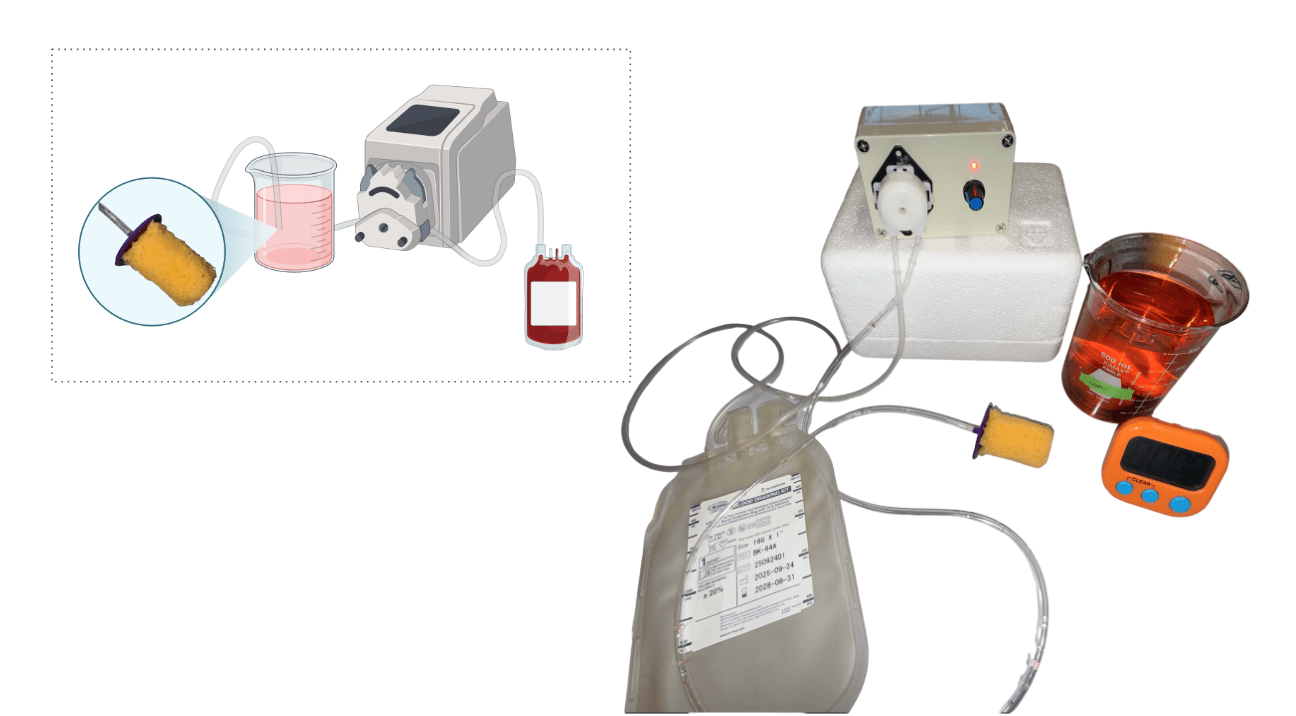
Hemorrhage remains the leading cause of preventable death in combat and prehospital trauma, particularly for abdominal and junctional injuries where tourniquet and direct pressure are ineffective (Combat Casualty Care Research Program, 2023). In combat settings, limited access to donor blood, lack of cold storage, and prolonged evacuation times significantly increase mortality risk during the Golden Hour. This project proposes the design and development of a combat-ready blood recollection system that allows the safe collection and storage of a patient's own blood for potential autologous transfusion in resource-limited environments. The proposed device is designed to be placed directly over an open wound, where it gently collects shed blood while minimizing additional tissue damage and blood cell hemolysis. The system integrates three core elements. First, a biocompatible porous sponge made of polyurethane foam absorbs pooled blood from irregular wound shapes. Second, a sealed adhesive interface maintains an airtight environment and prevents air entry. Third, controlled negative pressure generated by a rotor pump draws blood into a small anticoagulant-compatible reservoir. Together, these components enable efficient blood recollection while preserving blood integrity for potential reinfusion. The system specifically targets abdominal and junctional hemorrhage, injuries that are difficult to manage with existing technologies and account for a large proportion of preventable combat deaths. Unlike traditional cell salvage systems that require sterile surgical environments and bulky equipment, this device is compact, portable, and designed for use by minimally trained providers in high-stress field conditions. The design prioritizes simplicity, rapid deployment, single-user operation, and single-use sterile patient-contacting components. Overall, this approach aims to reduce dependence on donor blood and improve survivability during prolonged casualty care.