Project Description:
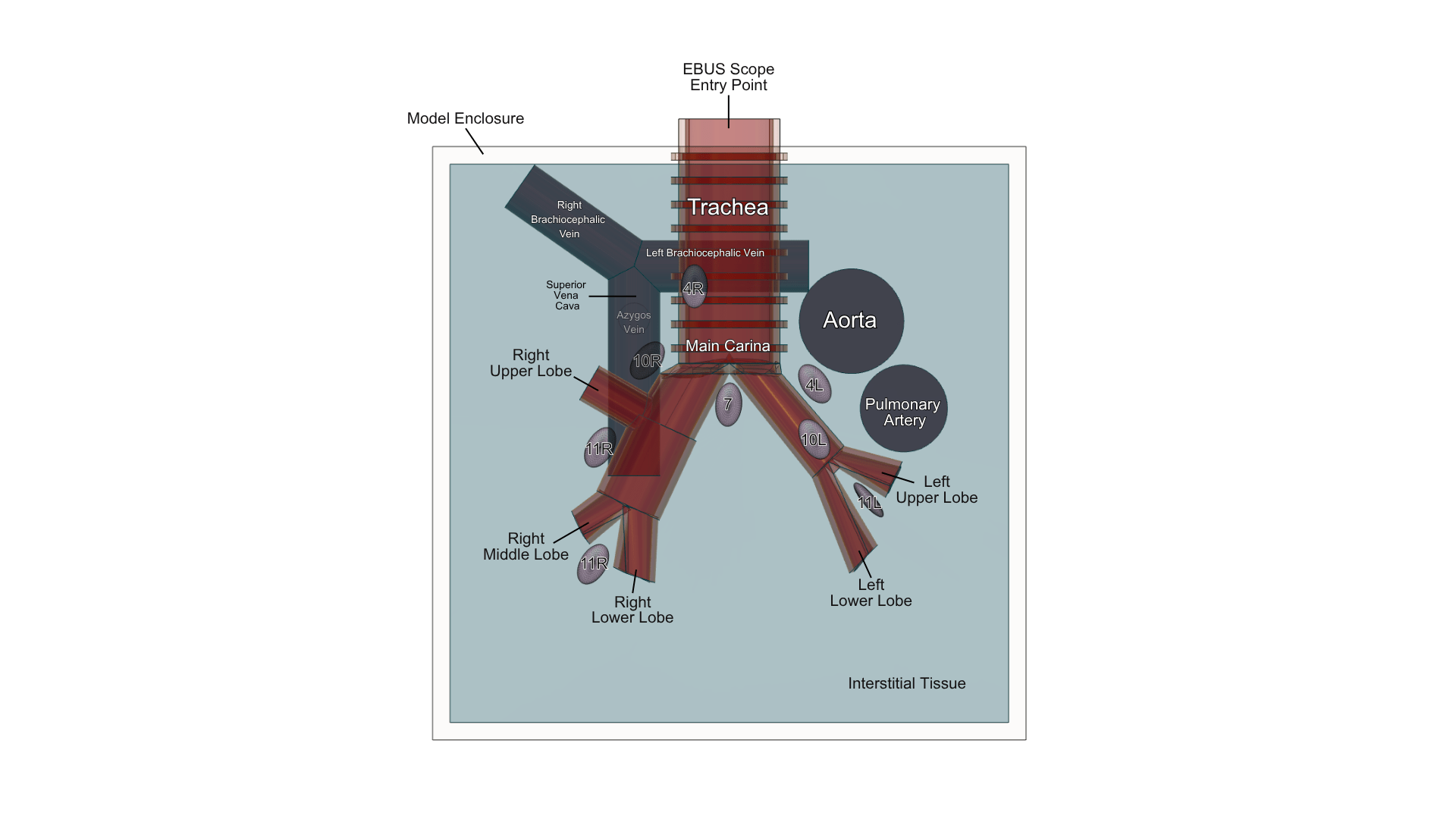
Endobronchial Ultrasound-Guided Transbronchial Needle Aspiration (EBUS-TBNA) is an essential procedure in diagnosing and staging lung cancer, sarcoidosis, and lymphoma. EBUS-TBNA enables minimally invasive sampling of mediastinal and hilar lymph nodes. This procedure utilizes a convex, side-viewing endobronchial ultrasound scope in combination with a biopsy needle to endoscopically sample lymph nodes and masses. Together, they allow for real-time visualization of anatomical landmarks during transbronchial needle aspiration. Despite the widespread clinical use of EBUS-TBNA, there are limited models available to accelerate procedural proficiency that are both anatomically accurate and cost-effective. EBUS-TBNA trainees are often limited to clinical encounters (live patient procedures) and require the guidance of an experienced clinician. Existing models with high fidelity are cost-prohibitive and are sold at the scale of thousands of dollars. To address these limitations, we created a $115 model that incorporates second-generation bronchi, 10 commonly biopsied lymph node stations, and blood vessels frequently used as anatomical EBUS landmarks. Through development and integration in clinical settings, this model will provide realistic needle feel and echogenicity during EBUS-TBNA simulation to streamline the training process, enhance procedural proficiency, and improve patient outcomes.