Project Description:
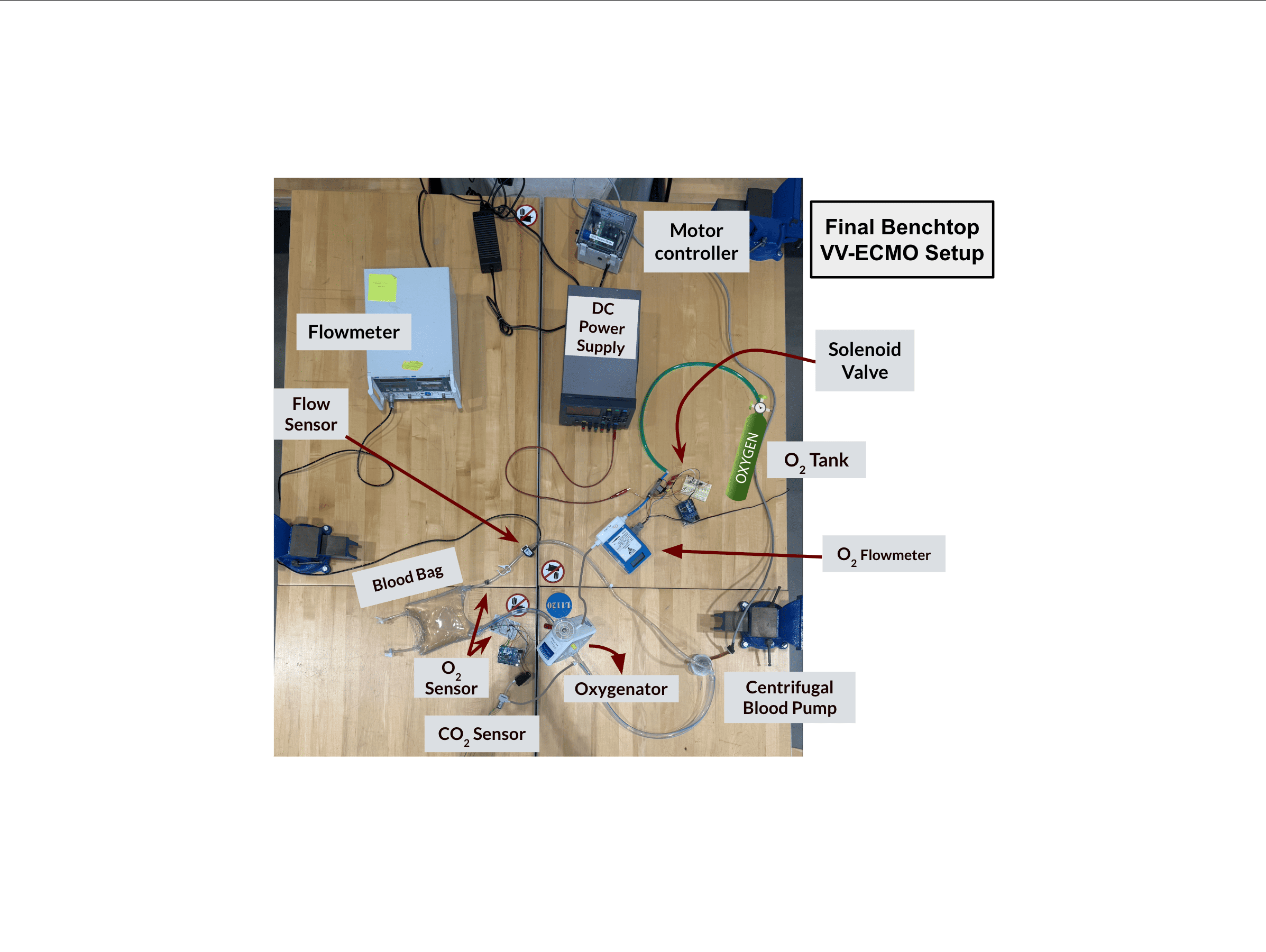
In cases of severe respiratory distress, venovenous extracorporeal membrane oxygenation (VV-ECMO) is a life-saving therapy that supports patients by performing the function of the lungs. VV-ECMO handles delivery of oxygen to the blood as well as removal of carbon dioxide by adjusting the blood flow and sweep gas flow. Current VV-ECMO devices require manual adjustment of these parameters, which involves constant monitoring from trained professionals, including perfusionists and nurses. Immediate treatment is difficult to achieve with the burden of manually adjusting VV-ECMO settings, especially in low-resource environments. To eliminate the need for direct manipulation of VV-ECMO, we developed an autonomously regulated VV-ECMO system to facilitate oxygenation and carbon dioxide removal in critically ill patients. Our design utilizes a sensor-driven closed-loop control framework, combining fuzzy logic with proportional-integral derivative control to manage system dynamics. During each cycle, the system collects key measurements, interprets them on a continuous spectrum, and issues gradual adjustments to sweep gas flow and blood pump speed. While our benchtop prototype demonstrates the feasibility of this approach, we must acknowledge that our simulated conditions may not perfectly replicate the complexities of a human patient, thus the system requires further testing before it can be installed in hospitals. Automation of ECMO will expand equitable access to advanced respiratory support by reducing the specialized labor required, allowing more hospitals to offer ECMO safely while improving patient safety.