Project Description:
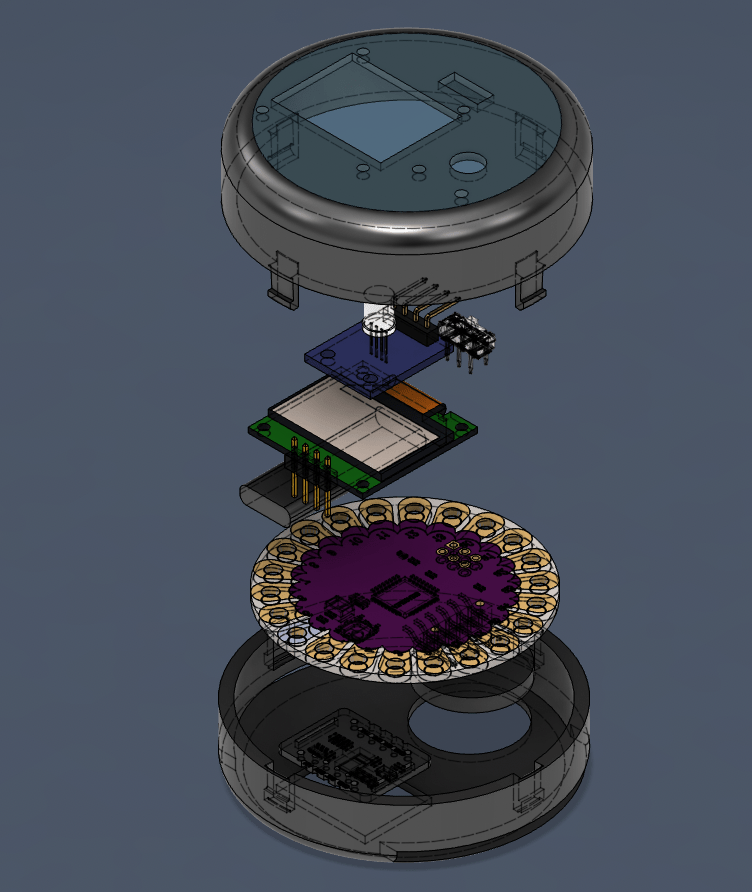
The VitalPatch is a point-of-care medical device focused on monitoring vitals, including pulse presence and limb temperature, in pediatric emergency medicine settings. Dr. Nico Dimenstein from Children's National Hospital expressed his negative experiences with manual pulse checks, including wasted man-power, time constraints, and some errors in standard vital detection methods utilized across emergency response teams and pediatric intensive care units. The VitalPatch offers a solution by actively monitoring the patients extremities for the entirety of the time the device is placed on the wrist or foot, eliminating the need for manual pulse checks. The device consists of a small, 3D printed casing with temperature and pulse sensors, making it a cost effective alternative for ambulances or emergency responses. This is a single use device that utilizes a customized circuit, including the sensors, visual cues, and an organic light emitting diode (OLED) screen, as well as continuous glucose monitoring (CGM) tape that is able to be safely stuck to the extremity of interest for as long as needed. Prototyping results have been promising, as Team 13 have achieved consistently accurate IF/NOT gated feedback for the pulse that allows for presentation on the OLED screen, as well as a temperature sensing mechanism that consistently measures temperature and variance over 30 minute periods. The temperature sensor has been validated against multiple hospital gold standards, including infrared-based thermometers, demonstrating an accuracy within +/- 1 °C of clinically relevant body temperature measurements, and testing by taking an accurate room temperature, placing on the wrist, and achieving clinically relevant results in the same trial. The pulse sensor has also been validated against the gold standard pulse oximeter in which the device has demonstrated an accuracy within +/- 5 bpm. Key ethical considerations for the VitalPatch include accuracy and reliability, patient safety, and accessibility. False positives or negatives in critical care settings can lead to serious clinical consequences, they must be minimized through rigorous design and validation. The device's limitations must be clearly communicated, as the VitalPatch is a monitoring aid and not a diagnostic tool. Patient safety is ensured through the use of non-allergenic materials and safe battery operation to prevent harm during prolonged skin contact. Finally, the device has been intentionally designed to be low-cost and aligned with point-of-care standards, ensuring broad accessibility across diverse clinical environments.