Project Description:
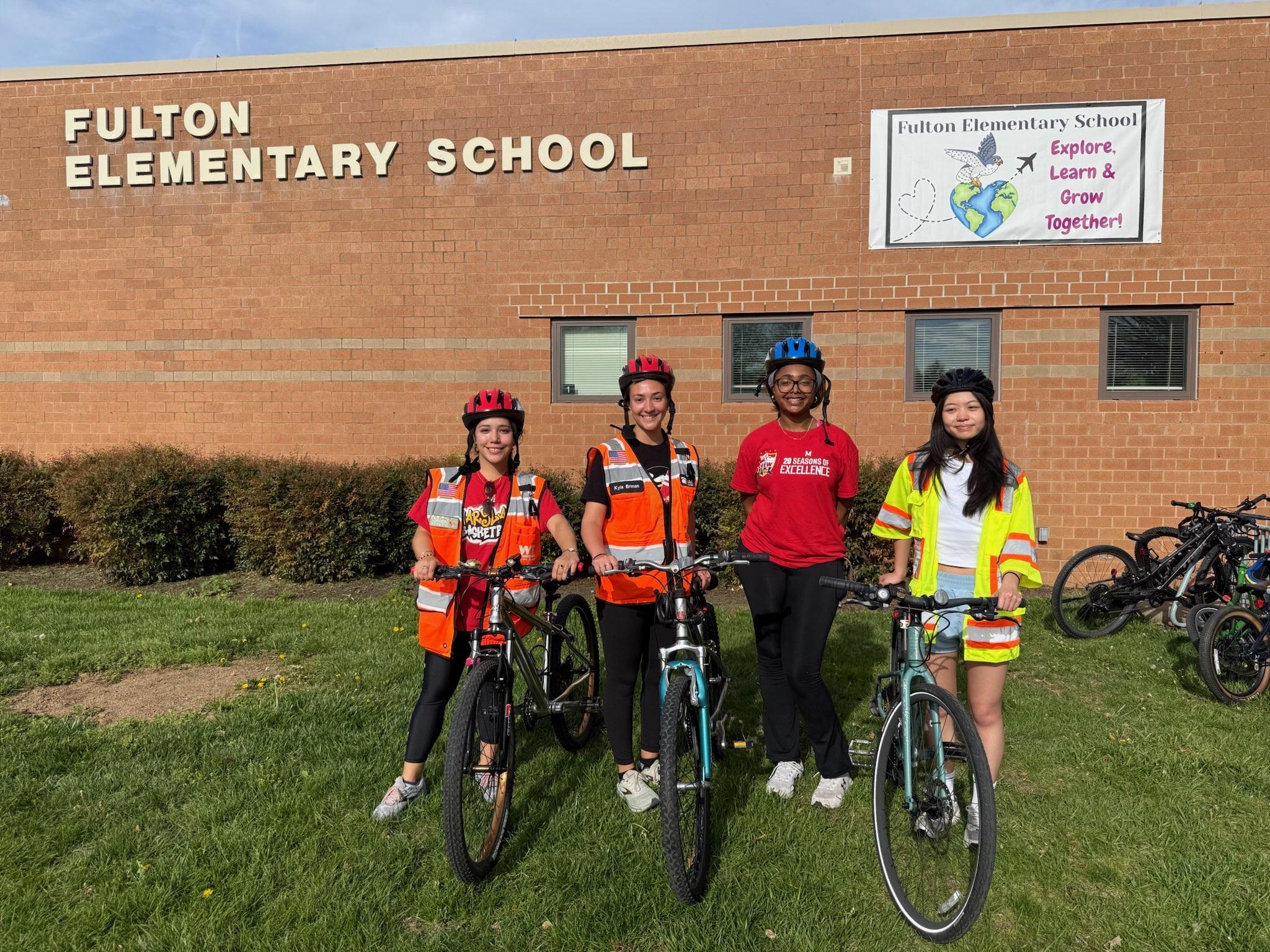
Our goal is to improve bikeability for students across Maryland, making it a safe and accessible option for all ages. Biking has the opportunity to build community, support academic success, and reduce carbon emissions, making it a fun, sustainable, and practical solution for healthier, more connected students. We implemented 2 methods: bike buses at an elementary and middle school, and an infrastructure redesign at the high school level. Using GIS data, we identified key areas based on factors like student density, traffic stress levels, and existing biking infrastructure. At Fulton Elementary School in Howard County and Holy Redeemer School in PG County, we piloted a weekly ‘bike bus’ program. Bike buses are groups of students riding to school together with trained adult volunteers leading and following. Students can group the ride at stops with designated times and locations, or join anywhere along the route. We designed routes targeting low-traffic roads, bikable paths, and implemented feedback from parents on which areas to include. At Oakland Mills High School, we conducted site visits and redesigned the surrounding infrastructure to make it safer and more accessible for students to bike to school. We designed proposed roadway improvements in Microstation, developing bike lanes in accordance with NACTO for maximised safety as well as lowering the width of car lanes to enforce low speeds, which will provide a safer environment for bikers and pedestrians. Our proposal also includes water runoff evaluation and cost estimates to ensure feasible implementation. Biking helps tackle critical issues among the youth, such as a lack of physical activity, loneliness, and mental health challenges. Our two-pronged strategy lays the groundwork for long-term, systemic improvements, and shows how civil engineering, active transportation, and sustainable design go hand in hand to create safer, healthier, and more connected communities for the next generation.